

If you’ve ever wondered how many watts a refrigerator uses, you’re not alone. Refrigerators run continuously to keep your food fresh, making them one of the most consistent energy users in your home. Understanding refrigerator watts usage can help you manage your electricity bills, plan energy-efficient upgrades, and even decide if solar panels could reduce your costs.
Most home refrigerators use between 300 and 800 watts, with an average of 500 watts. However, actual energy consumption depends on the fridge’s size, model, age, and features. Newer, ENERGY STAR-certified models consume significantly less power than older units, while larger fridges or those with ice makers and smart features require more energy to operate.
With electricity prices steadily rising across the United States, knowing your refrigerator’s wattage is more important than ever. In this guide, we’ll break down average wattage, daily and monthly energy costs, and practical tips to reduce your fridge’s power consumption, helping you save money while keeping your food perfectly chilled.
How Many Watts Does a Refrigerator Use and How Much Does It Cost?
Most home refrigerators use between 300 and 800 watts, with an average of 500 watts. While your fridge might not seem like a power-hungry appliance, it works harder than most. Its compressor can run 30% to 80% of the day to keep your food cold, which adds up to significant electricity consumption over time.
With electricity prices steadily rising, many homeowners are asking: How many watts does my refrigerator use, and how much is it costing me? Let’s explore typical consumption rates, factors that affect them, and tips to reduce your fridge’s energy usage.
Key Takeaways
-
The average refrigerator uses 500 watts, but models range from 300 to 800 watts.
-
Most fridges consume about 6 kWh per day.
-
Running a refrigerator costs roughly $29.10 per month or $350 per year, depending on your electricity rates and usage.
-
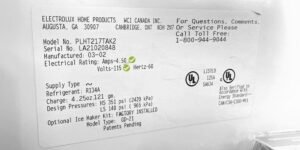
You can calculate energy usage by checking the fridge’s amperage and voltage on the back label.
-
Cleaning coils, setting proper temperatures, and avoiding overstocking can reduce energy consumption.
Average Refrigerator Wattage
Refrigerator wattage tells you how much power the appliance needs at any moment.
-
Older refrigerators tend to consume more electricity.
-
Modern, energy-efficient models use less power while keeping your food just as cold.
-
Wattage varies depending on fridge size, model, and features.

How Much Does It Cost to Run a Refrigerator?
On average, a refrigerator costs $0.96 per day to run. That adds up to about $29.10 per month or $350 per year. Of course, costs fluctuate based on electricity rates, usage, and the fridge model.
Here’s a quick guide showing how run time affects energy consumption and cost:
| Daily Run Time | Daily Energy Use (kWh) | Monthly Cost* |
|---|---|---|
| 6 hours | 3 kWh | $14.55 |
| 8 hours | 4 kWh | $19.41 |
| 10 hours | 5 kWh | $24.26 |
| 12 hours | 6 kWh | $29.10 |
| 14 hours | 7 kWh | $33.95 |
| 16 hours | 8 kWh | $38.80 |
*Based on a 500-watt refrigerator and national average electricity rates.
Example: Residents in Hawaii, with the highest electricity rates, pay around $887 per year to run a fridge, while North Dakota residents pay just $217 per year.
Should I Unplug My Refrigerator to Save Energy?
Generally, no. Unplugging may save a little energy temporarily, but the fridge will consume more electricity when it restarts to reach the proper temperature. Instead, focus on efficiency measures that reduce continuous consumption.
How to Calculate Your Refrigerator’s Energy Use
1. Check the Energy Label
Most fridges display amps and voltage. Use this formula to calculate power in watts:
Watts = Volts × Amps
Example: A fridge with 4.5 amps and 115 volts:
4.5 × 115 = 517.5 watts
Assuming it runs 12 hours daily:
(517.5 × 12) ÷ 1,000 = 6.21 kWh/day
2. Look for ENERGY STAR Certification
ENERGY STAR-certified fridges (post-1996) include a yellow label with annual energy usage and running cost estimates. These labels are generally accurate and can help compare models.
3. Use a Smart Electrical Panel
If you have a smart panel like SPAN or Lumin, you can track real-time electricity usage for your refrigerator. This gives the most accurate daily consumption.
7 Factors That Affect Refrigerator Energy Use
-
Wattage and Energy Efficiency Rating – Newer, ENERGY STAR-rated models use less power.
-
Fridge Size – Larger fridges require more energy to cool.
-
Type and Features – French doors, ice makers, and smart features increase consumption.
-
Climate and Room Temperature – Warmer kitchens make the fridge work harder.
-
Usage – Frequent door openings increase energy use.
-
Maintenance and Age – Dirty coils or frost buildup reduce efficiency.
-
Temperature Settings – Set fridge to 37°F and freezer to 0°F for optimal balance.
How to Reduce Your Refrigerator’s Electricity Usage
-
Upgrade to a New Model: ENERGY STAR-certified fridges use significantly less energy than older units.
-
Set Proper Temperatures: 37°F for the fridge, 0°F for the freezer.
-
Be Mindful When Opening Doors: Plan what you’ll remove and close doors promptly.
-
Avoid Overstocking: Proper airflow reduces compressor work.
-
Perform Routine Maintenance: Clean condenser coils and defrost regularly to keep efficiency high.
Lower or Eliminate Your Power Bill
Even with energy-saving habits, refrigerators still use electricity. The most effective way to cut costs is installing solar panels.
Using a solar calculator, you can determine:
-
How many panels you need
-
Recommended system size
-
Estimated savings over 25 years
-
Connections to local solar companies
With solar, your refrigerator and other home appliances can run without worrying about rising electricity costs.
Conclusion: How Many Watts Does a Refrigerator Use?
Knowing how many watts your refrigerator uses is essential for understanding your household energy consumption and managing your electricity costs. Most refrigerators use between 300 and 800 watts, with an average of 500 watts, and the actual usage depends on factors like size, age, model, features, and efficiency rating. By calculating daily and monthly energy consumption, you can make informed decisions about energy-saving strategies, such as adjusting temperature settings, maintaining the fridge, or replacing an old model with an ENERGY STAR-certified appliance.
Reducing your refrigerator’s energy usage not only lowers your monthly electricity bills but also contributes to environmental sustainability by decreasing your household carbon footprint. Simple changes, like keeping coils clean, avoiding overstocking, and minimizing door openings, can make a significant difference.
For homeowners looking to maximize savings and protect against rising electricity rates, combining an energy-efficient refrigerator with solar panels can deliver long-term financial benefits. By generating your own electricity, you can offset a significant portion of your fridge’s energy consumption and enjoy predictable energy costs for decades.
Understanding your refrigerator’s power usage is the first step toward smarter energy management, lower utility bills, and a more sustainable home. Make energy efficiency a priority today, and watch your savings grow while keeping your food fresh and safe.
