

If you’re a homeowner or renter, understanding your home’s electricity consumption is more important than ever. In 2025, the average American household uses a significant amount of energy each month, and knowing exactly how many kilowatt-hours (kWh) your home consumes can help you manage costs, reduce waste, and plan for energy-saving upgrades.
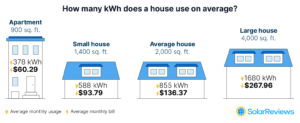
According to the latest data, the typical U.S. home consumes around 855 kWh per month, or roughly 28 kWh per day. Energy use varies depending on factors like home size, number of occupants, appliances, heating and cooling systems, and even your lifestyle. With electricity prices continuing to rise and households relying more heavily on electronics, tracking your energy usage has become essential for budgeting and sustainability.
In this guide, we’ll break down the 2025 data on household electricity consumption, explain the key factors that drive your energy use, and offer practical tips to lower your monthly electricity bills while keeping your home comfortable year-round. Whether you want to save money, reduce your carbon footprint, or prepare for a solar installation, understanding your home’s kWh usage is the first step.
How Many kWh Does a House Use Per Day?
If you’ve ever checked your electricity bill and wondered how much energy your home actually consumes each day, you’re not alone. According to the U.S. Energy Information Administration (EIA), the average American household uses about 855 kilowatt-hours (kWh) per month, roughly 28 kWh per day.
Since 1950, household energy use has steadily increased. Houses have grown larger, and we rely more on electronics than ever before. At the same time, electricity costs have nearly doubled since 2005, leaving homeowners with higher bills.
Now is the perfect time to evaluate whether your house uses more energy than necessary. In this guide, we’ll break down average electricity usage, the factors that affect it, and practical steps to reduce consumption and save on monthly bills.
Key Takeaways
-
The average American home uses about 855 kWh per month or roughly 28 kWh per day.
-
The typical monthly electricity bill in the U.S. costs around $136.
-
Homes in Louisiana use the most electricity, while California homes use the least.
-
Factors that influence electricity usage include home size, number of occupants, HVAC systems, appliances, overall home efficiency, climate, and lifestyle.
How Many kWh Does a House Use Per Day?
| Daily | Monthly | Yearly |
|---|---|---|
| 28 kWh | 855 kWh | 10,260 kWh |
The EIA reports that the average American home consumes 855 kWh per month. This equals just over 28 kWh per day. Keep in mind, consumption can fluctuate depending on the season, household habits, and other factors.
How to Calculate Your Daily Electricity Usage
To calculate your daily electricity usage, check your latest electric bill. Most bills show kWh data for the previous 6–12 months. Add up the monthly kWh totals, divide by the number of months, and then divide by 30 to find your daily average.
7 Factors That Affect Household Electricity Use
Several factors determine how much electricity your home uses. These factors influence daily, weekly, monthly, and seasonal energy consumption.
1. Home Size
Bigger homes consume more electricity because they require more energy to heat, cool, and light. If your house sits in an extreme climate, your bills can rise disproportionately as HVAC systems work harder to maintain comfort.
2. Number of Occupants
More people in a household mean more lights, devices, and appliances in use. A family of four will naturally consume more electricity than a single occupant, especially if everyone charges phones, uses computers, or runs household appliances frequently.
3. Heating and Cooling Equipment
Heating and cooling account for roughly 54% of household energy use. The type, age, and efficiency of your HVAC system can greatly influence electricity consumption. All-electric systems use more electricity, while gas or oil systems use some electricity but rely primarily on fuel. Aging HVAC equipment also consumes more power, while newer high-efficiency models use less.
4. Appliances
Appliances like refrigerators, ovens, and water heaters make up about 25% of household electricity use. Energy-efficient appliances with ENERGY STAR ratings consume less electricity. Usage frequency also matters, dishwashers, laundry machines, and water heaters use more energy in larger households.
5. Home Efficiency
A home’s overall efficiency can impact electricity use more than individual appliances. Updated insulation, new windows and doors, and sealed HVAC ducts reduce energy waste. The more efficient your home, the less your HVAC system has to work to maintain comfort.
6. Climate
Climate plays a big role in electricity usage. Hot, humid areas in the South often rely on air conditioning for months, while cold northern states may use electric heat in winter. Local weather patterns directly affect your monthly energy consumption.
7. Lifestyle
Lifestyle choices also affect electricity use. Working from home, charging an EV, running a pool pump, or heating large amounts of water can significantly increase your monthly consumption. Daily habits, like leaving lights on or using electronics frequently, add to overall energy use.
Electricity Usage by State
Electricity consumption varies by state due to climate and energy rates. For example:
-
Alabama: 1,112 kWh/month – $167 average bill
-
California: 491 kWh/month – $148 average bill
-
Louisiana: 1,238 kWh/month – $136 average bill
(Use local data tables to check your state-specific electricity consumption.)
Average Home Electric Bill
Across the U.S., homeowners spend an average of $136 per month on electricity. This calculation comes from average monthly usage (855 kWh) and the national average per-kWh cost (15.95 cents).
How to Reduce Electricity Usage and Save Money
Here are practical ways to lower your monthly bills and energy use:
1. Install a smart thermostat – Automate your HVAC system to save energy when no one is home.
2. Upgrade to efficient HVAC systems – Modern furnaces, boilers, and AC units use less electricity while maintaining comfort.
3. Replace old appliances – Focus on energy-hungry items like water heaters and refrigerators.
4. Improve home insulation – Install double or triple-pane windows, seal doors, and prevent air leaks to reduce HVAC energy consumption.
5. Seal HVAC ducts – Leaky ducts waste energy; proper sealing reduces electricity use.
6. Conduct a home energy audit – Professionals can identify areas where your home loses energy and recommend improvements.
7. Practice mindful energy use – Turn off lights, unplug appliances, and power down devices when not in use.
8. Invest in solar panels – Solar panels can drastically reduce the electricity you draw from the grid. Even if total energy use doesn’t change, solar power lowers your utility bills while supporting sustainability.
Conclusion: How Many kWh Does a House Use in 2025
Understanding how many kilowatt-hours (kWh) your home uses is essential for managing energy costs and making smarter decisions about electricity consumption. In 2025, the average U.S. household consumes approximately 855 kWh per month, or 28 kWh per day, though actual usage varies depending on factors like home size, number of occupants, appliances, HVAC systems, climate, and lifestyle habits.
By tracking your electricity usage and understanding what drives high consumption, you can take practical steps to lower your energy bills. Simple changes, such as upgrading to energy-efficient appliances, sealing HVAC ducts, improving insulation, or installing a smart thermostat, can significantly reduce monthly electricity costs. For households aiming to maximize savings and sustainability, investing in solar panels is another powerful strategy.
Ultimately, knowing your home’s kWh usage empowers you to make informed decisions that save money, increase energy efficiency, and reduce your environmental impact. Whether your goal is cutting utility bills, optimizing energy use, or preparing for renewable energy solutions, keeping a close eye on your household’s kWh consumption is the key to long-term energy management success in 2025 and beyond.
