
Do Solar Panels Work When They’re Covered in Ice?
Solar panels are designed to capture sunlight through photovoltaic (PV) cells and convert it into usable electricity. These cells absorb light and generate a current that powers homes, offices, and other facilities. The efficiency of a solar panel depends less on the outside temperature and more on how much sunlight actually reaches the cells.
In fact, cooler temperatures often help solar panels perform better. Cold air reduces electrical resistance, which allows panels to operate more efficiently than they do on extremely hot days. This is why a clear, sunny winter morning can sometimes generate more electricity than a very hot summer afternoon.
Still, the key factor is exposure to sunlight. Panels will continue to generate power in cold weather as long as the surface is not blocked. However, if ice forms a layer across the panels, it limits how much sunlight gets through. This can reduce or even temporarily stop electricity generation until the ice clears.
How Ice Affects Solar Panel Performance
When ice collects on solar panels, it works like a barrier between sunlight and the PV cells. Unlike light snow, which may still allow some rays to pass through, ice creates a solid shield that blocks nearly all sunlight. As a result, panels cannot perform at their normal level, and energy production drops significantly.
Another concern is the weight of accumulated ice. While solar panels are built to withstand snow loads and harsh weather, too much weight from ice can put extra pressure on the system. In rare cases, this could strain the mounting hardware or slightly shift the panels. Fortunately, most modern solar panels are tested to handle heavy loads, making structural damage unlikely in typical winter conditions.
The biggest issue is reduced sunlight absorption. Once ice fully coats the surface, solar panels won’t produce their usual output until the ice melts or slides off.
How Long Does Ice Stay on Solar Panels?
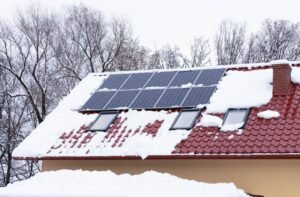
The amount of time ice lingers on solar panels depends on several factors. Panels are usually installed at an angle, which helps snow and ice slide away faster than they would on a flat roof. If the sun comes out after a storm, the dark surface of the panels absorbs heat, speeding up the melting process.
Location plays a major role as well. In regions with heavy ice storms or prolonged freezing temperatures, panels may stay covered for several days. In milder climates, ice often clears within hours once sunlight returns.
Overall, most solar panels free themselves from ice fairly quickly thanks to their tilted design and heat absorption. Homeowners rarely need to intervene unless there is persistent buildup.
De-Icing Methods for Solar Panels
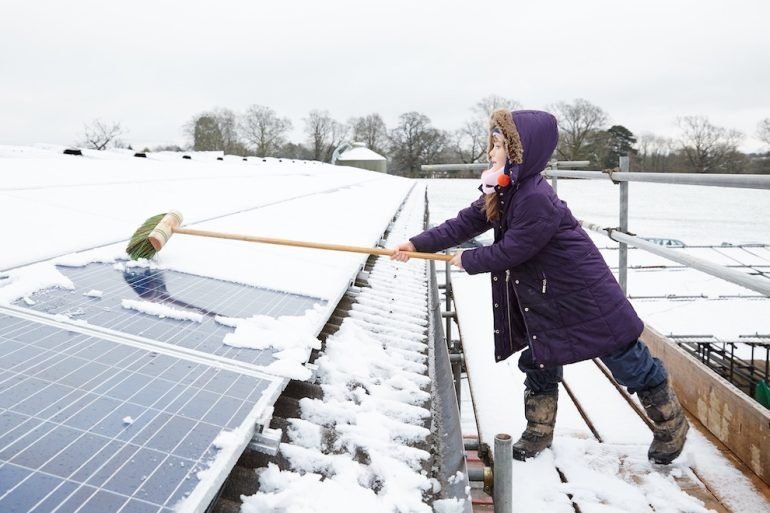
It can be tempting to scrape or chip away ice from your panels, but this is strongly discouraged. Using sharp tools or harsh chemicals can damage the panel’s surface and void the manufacturer’s warranty. Instead, solar systems are built to clear naturally once sunlight returns.
If panels are consistently covered in heavy ice, a few safe approaches can help:
Wait for natural melting – In most cases, panels clear on their own without intervention.
Warm air circulation – Some systems integrate heating elements or fans to prevent ice buildup in extreme climates.
Special coatings – Anti-icing coatings or hydrophobic layers can reduce how much ice sticks to the surface.
The safest option is to let the panels handle the process naturally. Trying to physically remove ice can cause more harm than good.
Winter-Friendly Solar Panel Features
Solar manufacturers are aware of challenges posed by snow and ice, so many panels come with built-in features to improve winter performance. Some have slick glass coatings that make it harder for ice to cling. Others are tested to endure heavy snow loads and extreme weather without losing efficiency.
Additionally, many solar systems are installed with inverters and monitoring tools. These allow homeowners to track performance in real time and confirm whether temporary drops are caused by ice coverage. Once the surface clears, production levels usually bounce back to normal.
Cost-Benefit Considerations of Winter Solar
Some homeowners worry that winter ice reduces the financial value of their solar investment. While ice can cause short-term interruptions, the overall effect on yearly electricity production is usually small. Solar systems are designed with long lifespans, often producing energy for 25 years or more, so a few icy days each winter have little impact on the bigger picture.
In fact, winter conditions may even help in some ways. Cold air makes panels more efficient, and once snow or ice clears, panels often perform better than in peak summer heat. This helps balance out any temporary energy loss.
Over the long term, the return on investment remains strong. Solar owners can expect consistent performance, lower energy bills, and significant savings, even in regions with snowy or icy winters.
Solar panels do work in cold weather, and in some cases, they work even better than they do in the heat. The main challenge comes when ice forms a solid layer across the panels, blocking sunlight. This prevents normal electricity generation until the ice melts or slides away.
Fortunately, most systems are designed to clear ice naturally. With angled installations, dark surfaces that absorb heat, and modern coatings that resist buildup, solar panels typically recover quickly after winter storms.
For homeowners considering solar in icy regions, the message is clear: occasional ice is not a dealbreaker. The long-term benefits of renewable, cost-saving energy far outweigh the short-term interruptions caused by winter weather.