

What does Monocrystalline Solar Panel mean?
Monocrystalline refers to a solid made of a single, continuous crystal. It has no grain boundaries, giving the material a uniform, uninterrupted crystal lattice. In contrast, polycrystalline materials consist of many smaller crystals. This continuous structure provides monocrystalline materials with unique mechanical, optical, and electrical properties.
Comparing Monocrystalline vs Polycrystalline Solar Panels
Monocrystalline solar panels use single-crystal silicon, which increases their efficiency and energy output. Polycrystalline panels, made of multiple crystals, generally have lower efficiency. Monocrystalline panels are often thinner, perform better in low-light conditions, and have a longer lifespan.
Key Features of Monocrystalline Materials
Single Crystal Structure: Monocrystalline materials feature a single, unbroken crystal lattice throughout their volume, ensuring uniformity.
Absence of Grain Boundaries: Unlike polycrystalline materials, monocrystalline materials have no boundaries between individual crystals, reducing defects and improving performance.
Unique Properties: The continuous crystal lattice gives monocrystals superior electrical conductivity and mechanical stability. This makes them ideal for high-efficiency solar panels.
Examples and Applications: Monocrystalline silicon powers high-efficiency solar cells and semiconductors. Some gemstones also exhibit monocrystalline structure. These materials are used in optics, electronics, and other fields that require precise electrical or mechanical properties.
Top Examples of Monocrystalline Solar Panels in 2025
In 2025, leading examples of monocrystalline solar panels include Maxeon’s Maxeon 7 series with high efficiency and long-term warranties, and the AIKO Neostar 3P54 series known for its high efficiency and compact design. Other top contenders include panels from LONGi, Jinko Solar, and REC Group, each offering unique strengths in terms of efficiency, durability, and power output.
Maxeon Solar Technologies Panels Overview
Maxeon 7 series: Known for high efficiency (up to 24.1%) and exceptional durability with a 40-year warranty.
>Maxeon 6 series: Features a 22.8% efficiency and a strong reputation for reliability, formerly known as SunPower.
AIKO Solar Panels and Efficiency Ratings
Neostar 3P54 series: Currently the most efficient solar panel available, with a 25% efficiency rating, utilizing N-Type ABC (All Back Contact) cell technology, according to Clean Energy Reviews.
Neostar 2 series: A popular and cost-effective option with 22.8% efficiency.
LONGi Solar: Hi-MO X10 series: Combines monocrystalline and thin-film technology, achieving a 24.8% efficiency. Hi-MO 7 series: Another high-efficiency option from LONGi, offering a balance of performance and reliability.
Jinko Solar: Tiger Neo series: Known for its high power output and efficiency, with the Tiger Neo 3.0 reaching 24.8%.
REC Group: Alpha Pure series: Offers high efficiency and strong warranties, with the Alpha Pure RX achieving 22.6% efficiency.
Canadian Solar: TOPHiKu6 series: Provides a good balance of affordability and performance.
Factors to Consider When Choosing a Monocrystalline Solar Panel
Efficiency: Higher efficiency means more power output from a smaller area.
Durability: Look for panels with strong warranties and resistance to environmental factors.
Power Output: Consider the wattage rating of the panel, especially for larger installations.
Price: Compare prices from different manufacturers to find the best value.
Warranty: A longer warranty provides greater peace of mind.
What Appliances Can a Monocrystalline Solar Panel Power?
Monocrystalline solar panels can power a wide range of appliances, from small electronics and household devices to larger appliances like refrigerators and some air conditioners, depending on the system size and appliance wattage. They are versatile and can be used for various applications, including residential and commercial setups, portable power solutions, and even industrial-scale energy production.
Applications for Small to Medium Appliances
Rechargeable Electronics: Phones, laptops, tablets, cameras, and other portable devices.
Household Appliances: Small refrigerators, freezers, washing machines, fans, TVs, gaming consoles, and sound systems, according to Arnergy.
Lighting: LED bulbs and fixtures for indoor and outdoor lighting.
Water Pumps: For irrigation or providing water to remote locations.
Communication Systems: Powering cell phone towers, internet routers, and other communication devices.
Applications for Larger Appliances with Solar Panel Systems
Refrigerators and Freezers: Especially energy-efficient models.
Washing Machines and Dishwashers: Utilizing them during peak sunlight hours.
Electric Water Heaters: Utilizing solar thermal or heat pump systems.
Air Conditioners: Certain energy-efficient models, particularly those using heat pump technology.
Electric Ovens and Stovetops: When combined with a robust solar system.
Electric Car Chargers: Reducing reliance on the grid for EV charging.
Factors to Consider for Optimal Solar Panel Performance
Panel Wattage: The power output of the solar panel (e.g., 100W, 200W, 300W or higher) determines how much power it can generate.
Battery Storage: Batteries are crucial for storing excess energy produced during the day for use at night or during periods of low sunlight.
System Size: The number of panels and their configuration affect the overall power output.
Appliance Wattage: Each appliance has a specific wattage requirement. You need to calculate the total wattage of the appliances you want to power simultaneously.
Sunlight Availability: The amount of sunlight available will directly impact the amount of electricity generated by the panels.
Example Scenarios:
A 300-watt solar generator can power small appliances like a ceiling fan, lights, phone and laptop chargers, and a small refrigerator, according to ShopSolar.com.
A 200-watt solar panel can be used to charge batteries for items like a coffee maker, laptop, and LED lights in an RV or camper van, says ShopSolar.com.
A larger solar system with multiple panels and battery storage can power a home’s essential appliances, including a refrigerator, lighting, and a TV.
By carefully considering the factors mentioned above and matching the solar panel system to your energy needs, you can effectively power a variety of appliances with monocrystalline solar panels.
What does Polycrystalline Solar Panel mean?
A polycrystalline solar panel is a type of photovoltaic panel made from silicon wafers that contain multiple silicon crystals melted together. Unlike monocrystalline panels, which use a single, uniform crystal, polycrystalline panels have a more fragmented crystal structure, giving them a distinctive bluish, speckled appearance. This difference in crystal structure affects their efficiency and cost.
Manufacturing Process
Manufacturing: Polycrystalline panels are made by melting silicon fragments and casting them into a mold, then cooling them to form the wafers.
Crystal Structure and Appearance
Structure: The resulting wafers have multiple silicon crystals within each cell, unlike the single, continuous crystal found in monocrystalline panels.
Appearance: The multi-crystal structure gives polycrystalline panels their characteristic blue, speckled appearance.
Efficiency, Cost, and Applications
Efficiency: Because of the imperfections in the crystal structure, polycrystalline panels tend to have slightly lower efficiency ratings compared to monocrystalline panels.
Cost: The simpler manufacturing process for polycrystalline panels makes them generally more affordable than monocrystalline panels.
Applications: Polycrystalline panels are widely used in residential and commercial solar installations, offering a cost-effective way to generate electricity from sunlight.
Top Examples of Polycrystalline Solar Panels in 2025
While monocrystalline panels often dominate discussions about high efficiency, polycrystalline solar panels remain a popular and cost-effective choice in 2025. Several manufacturers produce reliable and efficient polycrystalline panels. They target applications like residential or commercial installations.
Leading Manufacturers and Polycrystalline Solar Panels
Examples of Polycrystalline Solar Panels in 2025:
Canadian Solar: Canadian Solar maintains a strong presence in the solar market. They offer a range of polycrystalline panels for various installations and are known for reliability and performance.
JA Solar: JA Solar produces both monocrystalline and polycrystalline panels. The polycrystalline options often serve as a budget-friendly choice for specific projects.
Trina Solar: Trina Solar leads globally in solar panel manufacturing and offers a variety of polycrystalline options alongside other technologies.
First Solar: First Solar produces thin-film technology panels and cadmium telluride (CdTe) polycrystalline panels. These panels perform well in high-temperature environments and suit large-scale solar farms.
Key Factors When Choosing Polycrystalline Solar Panels
Key Considerations for Choosing Polycrystalline Panels:
Cost-effectiveness: Polycrystalline panels cost less than monocrystalline panels, making them ideal for projects with budget limits.
Efficiency: Polycrystalline panels do not match monocrystalline efficiency but provide a good balance of performance and price.
Durability and Lifespan: Manufacturers design polycrystalline panels for long-term performance and back them with warranties.
Applications: Polycrystalline panels suit residential rooftops, commercial installations, and large-scale solar farms.
Optimizing Polycrystalline Solar Panels for Maximum Performance
When selecting polycrystalline solar panels, research manufacturers, compare specifications, and match them to your project needs. Engineers should consider solar panel cost in 2025, Solar Panel Prices in 2025, Solar Panel Cost Per Watt, Solar Panel Installation, and Solar Panel Maintenance. Understanding these factors ensures optimal performance for residential, commercial, or industrial solar-energy projects.
What Appliances Can a Polycrystalline Solar Panel Power?
Polycrystalline solar panels can power a wide range of appliances, from small devices to larger home appliances, depending on the panel’s wattage and the overall system setup. A typical 200-watt polycrystalline panel can handle items like laptops, LED lights, and small refrigerators. Larger systems with multiple panels and battery storage can power appliances like washing machines, air conditioners, and even whole homes.
Small Appliances and Devices
Low-power devices: LED lights, mobile phones, laptops, radios, and small fans are easily powered by polycrystalline solar panels.
Rechargeable appliances: Coffee makers, mini projectors, and some small refrigerators can be powered by a solar panel system, often through battery storage.
Larger Appliances
Refrigerators: Larger refrigerators, especially energy-efficient models, can run on solar panels, but the number of panels and battery storage capacity must be increased.
Washing machines: Solar panel systems can power washing machines. System size, including the number of panels and battery storage, must be calculated based on the machine’s power consumption.
Air conditioners: Energy-efficient air conditioners, particularly heat pump models, can run on solar power. This usually requires a substantial solar panel and battery system.
Important Considerations
Panel wattage: The power output of the solar panel, measured in watts, is a key factor. Higher wattage panels support more power-hungry appliances.
System design: A solar panel system for appliances often includes batteries for storing energy and inverters to convert DC power to AC for household appliances.
Energy efficiency: Using energy-efficient appliances maximizes the benefits of solar power. For example, LED lighting instead of incandescent bulbs significantly reduces power consumption.
Sunlight availability: The amount of sunlight available directly affects power generation. Proper panel positioning and sufficient battery storage are important for reliable solar energy.
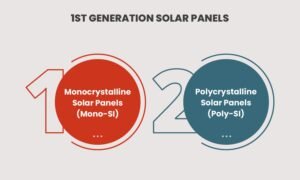
Best Monocrystalline vs Polycrystalline Solar Panels: Which Should You Buy?
Monocrystalline panels are dark blue and have a round edge, which results from their production process. Polycrystalline panels have a square-shaped edge and are mostly light blue. The color and shape can affect aesthetics if you want your panels to blend in or look visually appealing. Polycrystalline panels are slightly larger than monocrystalline panels for the same power rating.
Manufacturing Process of Silicon Solar Panels
Silicon solar panels are produced through a complex process, which varies slightly depending on the type of module. For monocrystalline modules, a single silicon crystal seed is dipped into a molten silicon solution made from silicon rocks at 2500 degrees Fahrenheit. The resulting cylindrical structure, called an ingot, is sliced into wafers for solar cells.
Polycrystalline cells follow a similar process, but instead of pulling a single crystal, the silicon is left to cool naturally. The distinctive grains in polycrystalline cells form because the ingot contains multiple silicon rocks.
Efficiency and Space Considerations
Monocrystalline cells are more efficient than polycrystalline cells. A 100-watt monocrystalline panel delivers the same power as a 100-watt polycrystalline panel, meaning the polycrystalline panel needs more area to produce the same energy. When choosing between the two, consider available space. If space is limited, such as on a van or boat, monocrystalline panels are the better choice. If space is not a constraint, such as on a rooftop, polycrystalline panels are cost-effective.
Cost and Performance Comparison
For a 100-watt solar panel, modern technology has reduced the efficiency differences between monocrystalline and polycrystalline panels compared to ten years ago. Monocrystalline panels offer similar durability and performance in shaded conditions as polycrystalline panels. Mono panels are recommended when space is restricted. Poly panels are more affordable for the same amount of power if space is not an issue. Flexible solar panels are not recommended due to their short lifespan of only a few years and poor heat dissipation.
Monocrystalline vs Polycrystalline Solar Panels: Which is Better?
Monocrystalline and polycrystalline solar panels are two of the most common types available for residential and commercial solar installations. Homeowners often receive quotes featuring one or the other, and salespeople naturally promote the panels they sell while criticizing alternative options. Comparing two quotes, one using monocrystalline panels and the other using polycrystalline panels—can sometimes create confusion, as each salesperson emphasizes the supposed advantages of their own products.
Performance Differences Between Mono and Poly Panels
For panels of similar wattage, the performance difference between monocrystalline and polycrystalline panels is minimal. The difference is so small that it should not significantly affect the decision. The most important factor is choosing a reputable brand that delivers consistent quality and reliability over time.
A newer option, cast mono panels, combines aspects of both monocrystalline and polycrystalline technology. Despite being a hybrid, performance differences among monocrystalline, polycrystalline, and cast mono panels remain negligible. The key consideration is selecting a trusted brand that will last 25 years or more on your roof.
Three Most Popular Home Solar Panels
The three most common types of home solar panels are polycrystalline panels, monocrystalline panels, and flexible panels. Monocrystalline and polycrystalline panels share many similarities in construction. Both are typically encased in an aluminum frame and generally come with a 25-year warranty.
Efficiency Comparison Between Monocrystalline and Polycrystalline Panels
The major difference between monocrystalline and polycrystalline panels lies in efficiency. Monocrystalline panels, composed of a single continuous silicon crystal, convert about 20 percent of incoming solar energy into electricity. Polycrystalline panels, made from multiple silicon crystals fused together, convert approximately 17 percent of solar energy into usable electricity.
Flexible Solar Panels: Advantages and Limitations
Flexible panels differ significantly from traditional panels. They are lighter, weighing around 10 pounds per 150 watts, compared to approximately 25 pounds per 150 watts for mono and poly panels. However, they are less durable because they lack a rigid enclosure, making them prone to scratches and cracks. Flexible panels have lower efficiency, converting only about 12 percent of incoming solar energy into electricity. They also come with a shorter warranty, usually around 10 years, and are the most expensive per watt, costing approximately one dollar per watt.
Frequently Asked Questions (FAQ)
1. How Long Do Monocrystalline and Polycrystalline Solar Panels Last?
Monocrystalline and polycrystalline solar panels are designed to last decades, though lifespans vary slightly due to material and manufacturing differences. Monocrystalline panels, made from single-crystal silicon, typically last 25–30 years, maintaining about 80–90% of their original efficiency by the end of their lifespan. Polycrystalline panels, composed of multiple silicon crystals, usually last 20–25 years with a slightly faster efficiency decline. Both types are built to withstand harsh conditions such as rain, wind, and temperature fluctuations. Proper installation and routine maintenance can further extend their operational lifespan.
2. Solar Panel Degradation Rates: Monocrystalline vs Polycrystalline
Degradation rate measures the gradual loss of a panel’s energy output over time. Monocrystalline panels degrade 0.3–0.5% per year, meaning after 25 years they still produce 87–92% of their rated capacity. Polycrystalline panels degrade slightly faster at 0.5–0.7% per year, leaving 80–85% of original output after the same period. Choosing high-quality panels from reputable manufacturers helps minimize long-term degradation.
3. Factors Affecting Degradation Rates
Several factors influence how quickly a solar panel loses efficiency:
-
Extreme weather: Hail, storms, and strong winds.
-
UV exposure: Prolonged sunlight can slowly degrade panel materials.
-
Temperature fluctuations: Hot and cold cycles can stress the panel structure.
-
Mechanical stress: Improper mounting or physical damage from wind or debris.
Regular maintenance and selecting panels with protective coatings and durable frames can reduce these effects.
4. Top Features to Look for When Buying Monocrystalline or Polycrystalline Solar Panels
When buying solar panels, consider the following key features:
-
Efficiency ratings: Monocrystalline (18–22%), Polycrystalline (15–18%).
-
Warranty: 25 years or more for long-term assurance.
-
Degradation rate: Lower rates ensure sustained energy production.
-
Durability features: Anti-reflective coatings, weather-resistant frames, and PID resistance.
-
Cost per watt & performance reviews: Helps balance affordability with energy output.
Properly selected and installed panels can provide reliable, long-term renewable energy for homes, businesses, and off-grid applications.
